

What is in your Genome?
By now you should be quite aware of the fact that DNA contains all the information about you. Your DNA holds information about the color of your skin, your height, your fingernails. When think about it, this is something quite amazing. Everything about you, your parents, your grandparents, is kept in a small bit of acid called DNA.
Because an egg and sperm cell represents you, the DNA inside each of those cells contains everything about you. A common goal of many researchers today, is to be able to completely “read” a genome. By “reading” a genome, I mean gathering all the information that’s contained in the genome, in particular, the human genome. This goal takes the form of what is known as The Human Genome Project. Before we get into the HGP, let’s take a detailed look at a genome so you can understand a little better.
Three Levels of the Genome
The first thing you have to understand is that a genome can looked at in different ways. These “ways” can be thought of as different levels. There are three basic levels to a genome, the DNA level, the gene level, and the allele level. In each level, different information can be gathered which tells us new things about the genome, and a person as well. Let’s begin by first taking a look at a genome at the DNA level.
The Human Genome Project
At this point, let’s talk about a genome project that is of great importance for you, me, and every person living on the planet, The Human Genome Project.

The Human Genome Project, or HGP, is the genome project that is attempting to identify all the genes the make up the human genome. It was begun by the U.S. in 1990 with funding by the Department of Energy and the National Institutes of Health. It’s expected to be completed by 2005.


Here’s is what we know
- The number of genes turned out to be much smaller than once predicted. There are about 30 to 38 thousand human genes.
- Human DNA is very repetitive.
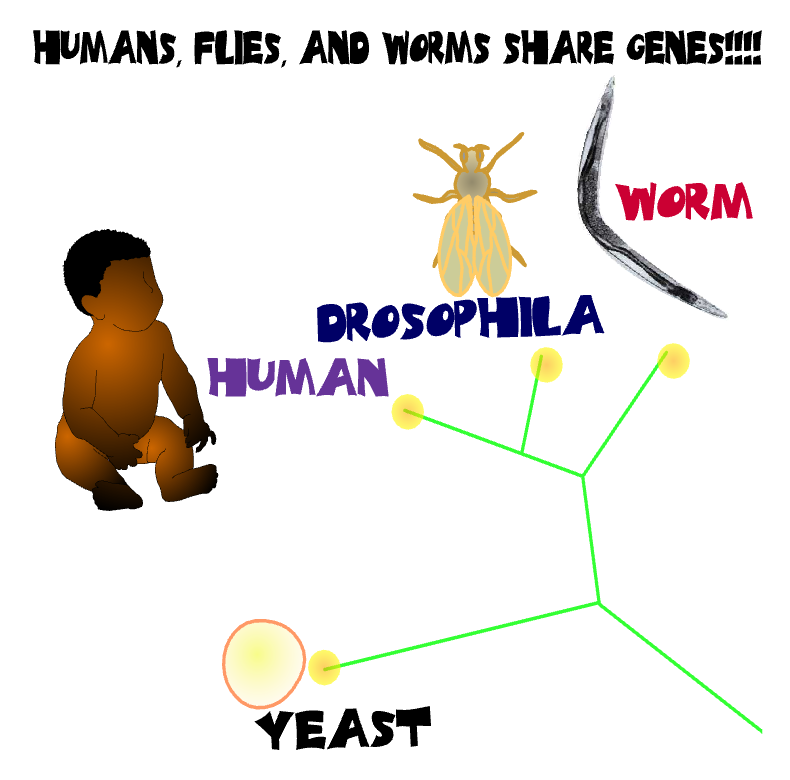
- Humans have many genes not found in invertebrates, such as insects and worms.
- Humans have many genes found in bacteria.
Shown toward your left is a basic summary of what both groups have discovered about the human genome.
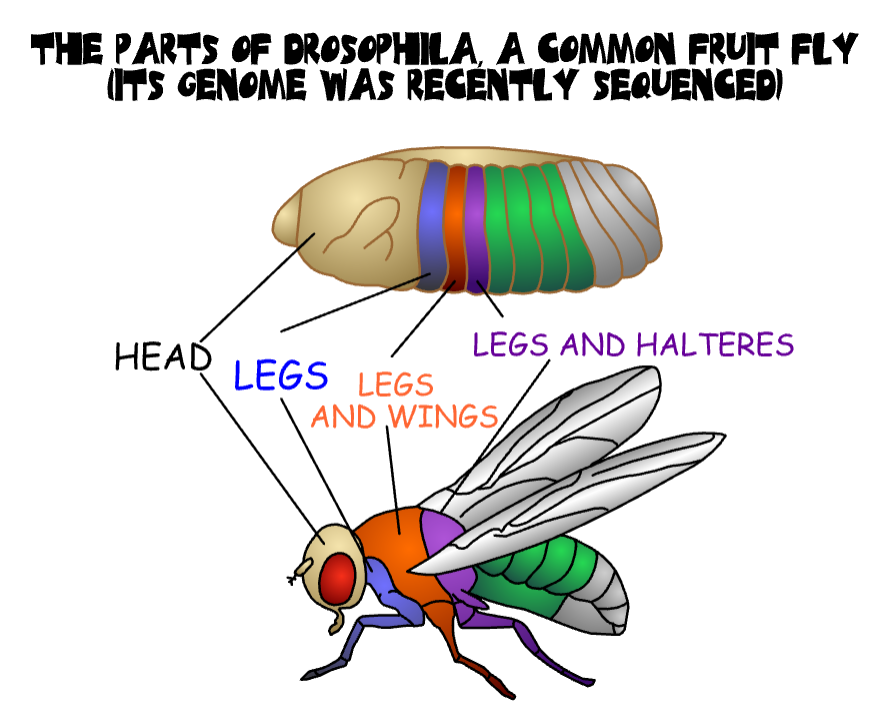
The genome of Caenorhabditis Elegans recently made the history books. It was the first multicellular life form to have its entire genome sequenced. C. elegans is a nematode, which basically is a very small soil worm. Its C-value is 9.5 million base pairs. It has 19,820 genes. C elegans has helped understand a process known as apoptosis, which is the time when a cell dies. This has helped in cancer research.
In total, there are about 49 genomes of 49 different living organisms that have been completely read and sequenced. Currently, there are genomes of other organisms that are being read. Here’s a link to the completed genomes of other organisms. At this point, you’re probably wondering why “reading” a genome is so important. In the next section, we are going to see why understanding the genome is so important.
Why Genomes are Important!!!
A genome is important because it gives us information about an organism. This is the obvious reason why a genome is important. This point really hits home when we study the genomes of other creatures. Here is what is meant.